Mail-in from all 50 states
FDM 3D Printing Service
Functional parts in real engineering polymers, by mail from any US state. Upload a file or mail in the part. Local pickup by arrangement in our Georgia pickup area.
Engineering grade FDM printing, not hobby printing
Vekform prints functional plastic parts, replacement parts and prototypes in nylon, carbon fiber nylon, ASA, polycarbonate, PETG and TPU, and ships them to every US state. Have your own file? Single prints in PLA or PETG are $29 to $75 shipped in the lower 48, with a firm price after we check the file. Engineering materials are priced from the rate card with a $95 minimum order, and a simple replacement part we model for you starts from $95. No file? Send a photo next to a ruler and two measurements, and we reply with a written quote or ask you to mail the part.
FDM is the workhorse process for functional parts. Vekform prints on production grade machines with enclosed, heated build environments, which is what lets us run nylon, carbon fiber nylon, ASA, and polycarbonate reliably. Those materials are where replacement parts and real prototypes live, and they are the ones most consumer printers cannot handle.
We treat every print as an engineering job. Orientation is chosen for the load path. Wall thickness and infill are set for the part's use, not a default. Dimensions that matter are checked, and when a fit is critical we run a test coupon before the final part.
Upload a file, or mail a part and we scan it first. Either way you get a quote with the price and the ship date before anything prints.
Examples of typical work
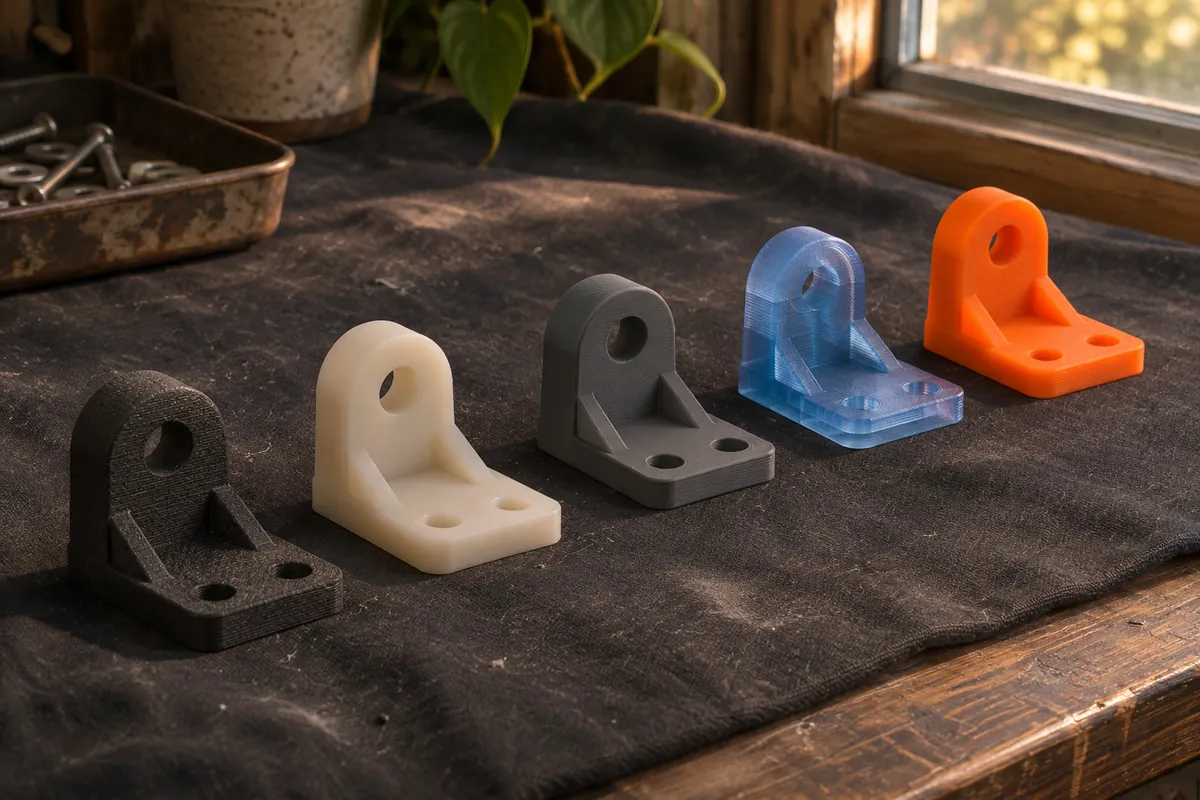
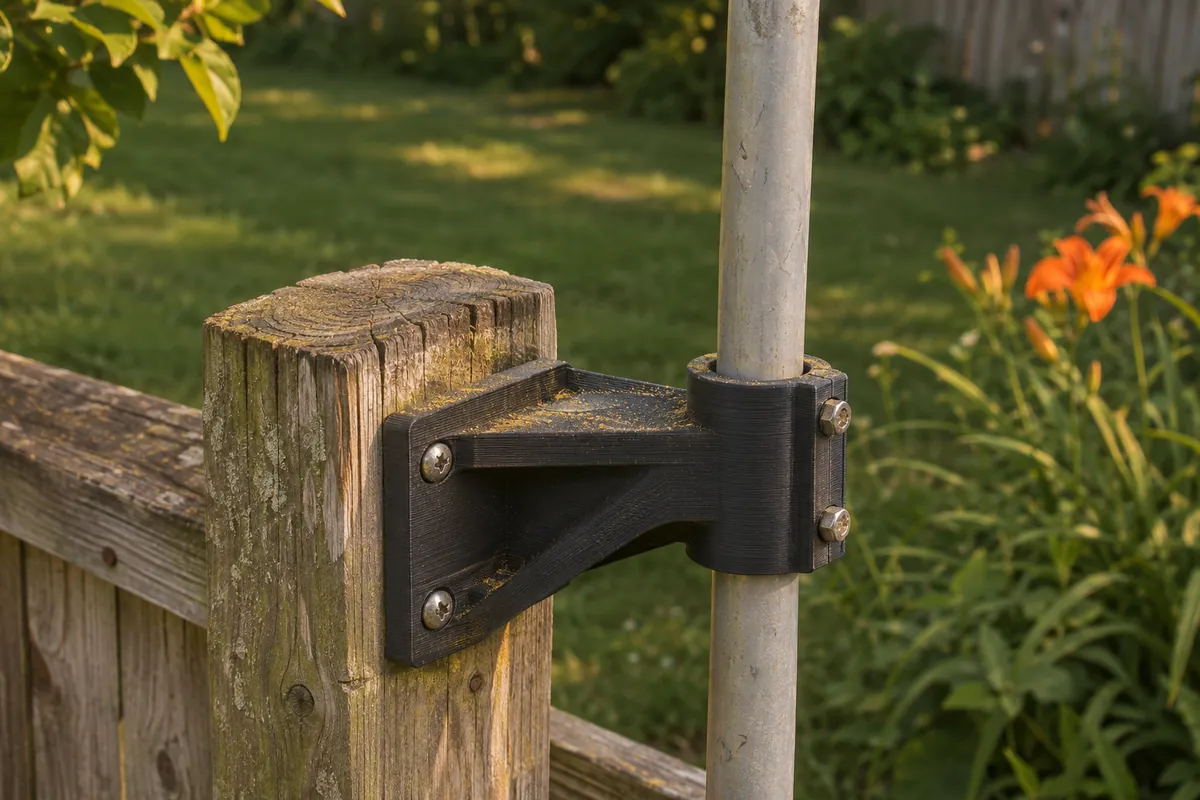
Example images of typical work, to help you picture your part. Have something like this? Send a photo for a quote.
Materials and when we use them
| Material | Best for | Why |
|---|---|---|
| PLA | Looks and fit checks, display models | Low cost, stiff, sharp detail. Softens in a hot car, so not for anything that lives outside or near heat. |
| PETG | Housings, brackets with light load, moisture exposure | Tougher than PLA with better temperature and chemical resistance. A good default for indoor functional parts. |
| ASA | Outdoor parts, automotive and marine trim, UV exposure | UV stabilized and a candidate for outdoor use. Color and service life still depend on exposure and the specific grade. |
| Nylon (PA) | Gears, clips, snap fits, living hinges, wear surfaces | Nylon grades differ in flexibility, wear and moisture uptake. Check the specific grade and exposure before selecting it. |
| Carbon fiber nylon (PA-CF) | Stiff brackets, fixtures, jigs, drone and robotics frames | A candidate for stiff fixtures. Moisture, print orientation and load affect dimensions and strength. Not for safety-critical structures. |
| Polycarbonate (PC) | High heat, impact, transparent or translucent parts | Heat and impact properties depend on the grade. Plain PC is not inherently UV stabilized and needs protection outdoors. |
| TPU (flexible) | Gaskets, bumpers, grommets, seals, feet | Rubber like flexibility in a range of hardness. Replaces torn rubber parts the manufacturer never sold separately. |
Heat resistance by material
These are grade-specific manufacturer heat-deflection results at 0.45 MPa. The cited sheets describe specimen conditioning, including drying and annealing. They are not continuous-use limits or measurements of Vekform parts.
Once a part arrives, our part care guide gives the cleaning, heat and chemical limits for each material in plain words.
| Material | Heat deflection temperature | What that means in practice |
|---|---|---|
| PLA | 57 C | ISO 75 at 0.45 MPa, conditioned test specimens |
| PETG | 69 C | ISO 75 at 0.45 MPa, conditioned test specimens |
| ASA | 100 C | ISO 75 at 0.45 MPa, conditioned test specimens |
| PC FR | 113 C | ISO 75 at 0.45 MPa, conditioned test specimens |
| PAHT-CF | 194 C | ISO 75 at 0.45 MPa, conditioned test specimens |
Manufacturer data sheets describe test specimens under stated conditions. They do not establish the strength, continuous service temperature or accuracy of a finished Vekform part. Geometry, orientation, moisture, load and exposure must be checked for the intended use.
Figures are from the filament makers' published technical data sheets.
What FDM is good at, and what it is not
FDM shines on functional parts in tough materials, on anything that needs to be made once or a few dozen times, on large parts, and on parts that need to be revised quickly. It is the right tool for brackets, housings, clips, gears under moderate load, jigs, fixtures, gaskets, and the long tail of parts no one sells any more.
It is not the finest tool for very small cosmetic detail, so we tell you when a small piece will lose fine detail and how we would simplify it. FDM is the wrong tool for high volume, where injection molding wins on unit cost, and for parts that genuinely need metal. We say so when that is the case, because a part you cannot use is worse than a quote you do not accept.
Common FDM jobs
Replacement parts
Scanned from the broken original and printed in a material selected for its intended use.
Functional prototypes
Tested, revised, and reprinted. Printed in the material the final product would use.
Jigs and fixtures
Soft jaws, assembly jigs, drill guides, and gauges in stiff carbon fiber composite.
Outdoor parts
ASA is UV stabilized. Plain PC needs protection from sunlight. Exposure, load and the exact grade determine suitability.
Flexible parts
TPU gaskets, bumpers, feet, and grommets to replace rubber parts never sold separately.
Design and inspection references
Common questions
What is FDM 3D printing?
How strong are FDM parts?
What tolerances can you hold?
Can you print a part larger than your printer?
Do you offer finishing?
Do you print metal?
Ready to start?
One photo, two measurements, and we send you a quote. You get the price and the turnaround in writing before any work begins.
Get a Free Quote